
Six months after the United States and Israel launched military action against Iran with the aim of reshaping the Middle East, the region has undergone major changes—but not in the manner its architects had anticipated.
Iran's Islamic Republic survived the killing of senior leaders and weeks of intense bombardment, while gaining significant leverage through the Strait of Hormuz. The conflict has also exposed vulnerabilities in the US security framework relied upon by Gulf Arab states for decades, prompting some countries to explore alternative security arrangements.
Israel, meanwhile, has secured a series of military victories against its adversaries without achieving a decisive end to the conflicts. Nearly three years into the Gaza war and amid further territorial expansion, Israel's relationship with its closest ally, the United States, has come under increasing strain. Prospects for normalising relations with Saudi Arabia have also weakened.
When Washington and Tel Aviv launched their offensive against Iran on February 28, their objective was reportedly to remove the country's clerical leadership and install a government more aligned with the West. Instead, Iran emerged with a more hardened leadership and greater determination to influence the regional order.
Former US ambassador Barbara Leaf said Iran now appeared more confident in its ability not only to survive but also to reshape the regional landscape.
Iran's fortunes changed during the war
Before the conflict, Iran appeared particularly vulnerable. Its currency had collapsed, triggering widespread anti-government protests that were violently suppressed in January. The country had also suffered attacks on its military and nuclear facilities during a 12-day war the previous summer, while Iran-backed groups had been weakened following the October 7, 2023 Hamas attack on Israel.
The situation changed after the initial US-Israeli strikes. Iran's leadership was rapidly reorganised, while calls for the Iranian population to rise against the government failed to gain traction.
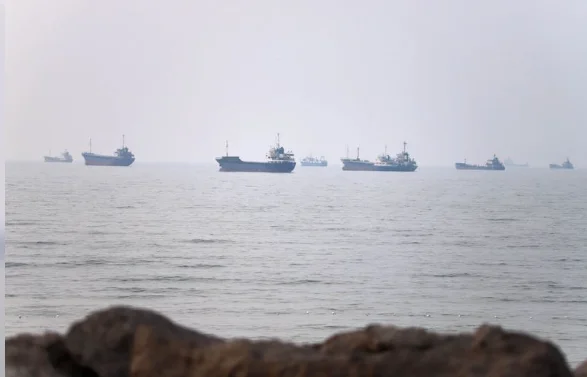
Tehran subsequently used the Strait of Hormuz, one of the world's most important routes for oil and gas shipments, as a major source of leverage. Iranian attacks on Gulf states hosting US forces also unsettled global energy markets.
US President Donald Trump agreed to a ceasefire in April and later signed an agreement with Iran in June, although the arrangement collapsed within weeks.
Iran has since sought greater control over the Strait of Hormuz, viewing it as a means of deterring future attacks and securing concessions, while refusing to compromise on its nuclear programme.
Experts, however, warn that prolonged disruption of Hormuz could also damage Iran's neighbours, China and the wider global economy, while encouraging efforts to develop alternative trade routes.
Gulf states reassess US security guarantees
The war has also raised serious questions among Gulf nations about the reliability of American security commitments.
For decades, Washington has maintained military bases and defence networks across the Gulf to protect major oil exporters from external threats. The system helped safeguard global energy supplies and deterred regional adversaries.
But the latest conflict exposed new vulnerabilities.
Iran targeted not only Israel but also Gulf states that sought to remain outside the conflict. US military bases and critical energy infrastructure came under attack, placing additional pressure on regional air-defence systems and American stocks of advanced interceptors.
Iran also targeted desalination facilities after attacks on its civilian infrastructure, raising fears that future conflicts could threaten essential water and electricity supplies across the Gulf.
Analysts say the absence of a clearly defined political objective and a lack of an effective alternative strategy after the initial strikes failed to remove Iran's leadership could weaken confidence in Washington.
Saudi Arabia's recent defence pact with Pakistan and Turkiye has been seen as an early indication that traditional US allies may be looking to diversify their security partnerships, although experts say no alternative can currently match the breadth of American defence capabilities.
Israel faces growing international and US pressure
Israel has also paid a heavy diplomatic price despite its military successes.
Iran-backed Hezbollah launched missiles at Israel soon after the war began, prompting Israeli airstrikes and another ground offensive in Lebanon. Israel has since reoccupied parts of southern Lebanon while continuing to expand its territorial control elsewhere following the October 7 attack.
However, its military gains have coincided with increasing international isolation and mounting criticism over its conduct in Gaza, allegations that Israel strongly rejects.
More significantly, support for Israel in the United States has weakened.
Criticism intensified among sections of the American political establishment, with some accusing Israel of contributing to Washington's involvement in another Middle Eastern war. During the summer, several critics of Israel won Democratic primary contests, while more than half of House Democrats voted in favour of reducing aid to Israel.
Israel has also faced growing criticism from sections of the political right.
Saudi-Israel normalisation appears further away
The deterioration in regional relations has also reduced prospects for a landmark Saudi-Israeli normalisation agreement.
Saudi officials increasingly view Israel's current leadership as a source of regional instability, according to analysts, making closer diplomatic ties difficult under present circumstances.
Six months after the Iran war began, the conflict has therefore produced a dramatically altered West Asia—but one marked by a more resilient Iran, growing uncertainty among Gulf allies, increasing pressure on Israel and a widening gap between the region's current trajectory and the outcomes initially envisioned by Washington and Tel Aviv.