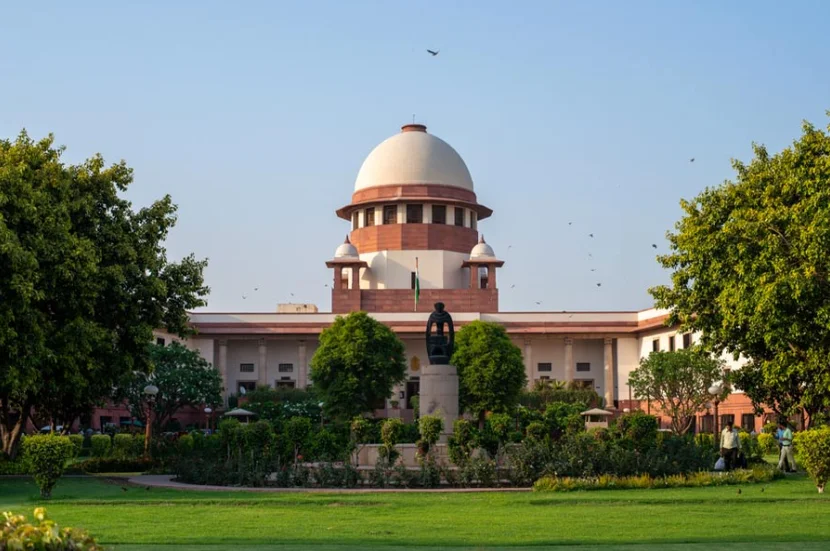
NEW DELHI, Oct 26: The Supreme Court on Monday directed all states and Union Territories to allocate funds for providing dedicated bar rooms, washrooms and other essential facilities for women advocates practising in district and taluk courts.
A bench comprising Chief Justice of India Surya Kant and Justices Joymalya Bagchi and V Mohana strongly disapproved of the absence of separate bar rooms for women lawyers, stressing that such facilities must be provided irrespective of the number of women advocates practising in a court.
“If there are no ladies' bar rooms, we strongly disapprove of it. It is the duty of all high courts and state governments to ensure that wherever women members are practising, they are provided an exclusive women's bar room with all facilities,” the bench said.
Emphasising that the directive must be implemented, the court said the requirement could not be set aside on grounds of inadequate funding or lack of space.
“This is the mandate. We do not want to deviate from that. It has to be complied with, whether additional funds or land are required. Whatever is required must be done,” the bench observed.
The court posted the matter for further hearing on December 2.
The apex court was hearing a plea filed by a group of women advocates highlighting concerns over accessibility, inclusiveness and the long-term sustainability of women's participation in the legal profession.
The petitioners had flagged the lack of adequately equipped women's bar rooms and other essential facilities in courts, tribunals and commissions across the country.
The Supreme Court had earlier stressed the need to create working conditions that enable women advocates to discharge their professional responsibilities safely, effectively and on an equal footing with their male counterparts.
Taking note of the concerns raised, the court had observed that the absence of basic facilities for women lawyers could not be dismissed as a matter of mere convenience.
The latest direction underscores the responsibility of state governments and high courts to ensure that women advocates have access to appropriate infrastructure and a supportive professional environment across district and taluk courts.