KATHMANDU, Sep 8: Nepal is stepping up efforts to restore vital road links and rebuild bridges destroyed by devastating flash floods, seeking temporary bridges from India and China to reconnect communities cut off by the disaster.
According to the National Disaster Risk Reduction and Management Authority (NDRRMA), the death toll from the August 26 disaster had reached 1,356 as of Monday, while 4,994 people remained missing. As many as 13,396 people have been rescued so far.
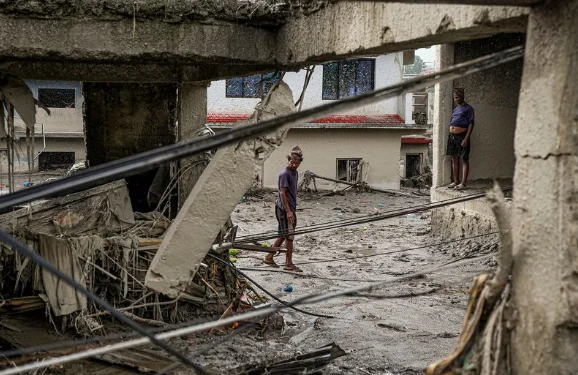
The floods, triggered by an ice-rock avalanche near the Nepal-Tibet border, caused the Bhotekoshi River to swell and sweep away homes, vehicles, roads and bridges. Several hydropower projects were also damaged across northern and central Nepal.
Nepal has requested temporary bridges from both India and China, with both countries responding positively.
China has already supplied two 100-metre Bailey bridges to the Korala border crossing in Mustang, according to The Kathmandu Post. India has also offered to provide Bailey bridges.
The Department of Roads has estimated damage to roads and bridges at around NPR 30 billion, while reconstruction costs are expected to reach nearly NPR 50 billion.
The disaster destroyed 41 motorable bridges between Rasuwa and Chitwan and partially damaged four others, leaving only 18 of the 63 bridges along the corridor intact.
Several crucial road connections have also been disrupted. In Rasuwa, the floods severed the road link with Nuwakot, while the destruction of the concrete bridge at Furke Khola cut the direct connection between Dhadingbesi and the Prithvi Highway.
The Department of Roads has begun clearing damaged stretches to reopen access and prepare sites for temporary bridges, the report said, quoting its deputy director general and spokesperson Shubharaj Neupane.
The Nepali Army is meanwhile installing an Acrow bridge at Devighat in Nuwakot.
The Department of Roads has 11 Bailey bridges, each measuring up to 48 metres, but transporting them to affected areas remains a major challenge as access roads have also been washed away.
“Even where Bailey bridges are available, there is no road to transport them to the sites. Work is underway to reopen the tracks damaged by the floods,” said Sushil Babu Dhakal, joint secretary in the Ministry of Physical Infrastructure and Transport.
The extensive infrastructure damage has further complicated rescue and recovery operations. Authorities are also facing difficulties in identifying bodies recovered from the floodwaters.
Only 98 bodies had been identified and handed over to relatives as of Monday, according to the NDRRMA. Many recovered bodies were severely damaged, decomposed or found in parts after being swept downstream, making identification difficult.
The disaster also reportedly claimed at least 43 lives on the Chinese side, while more than 500 people remained missing in Tibet, according to Chinese media reports.