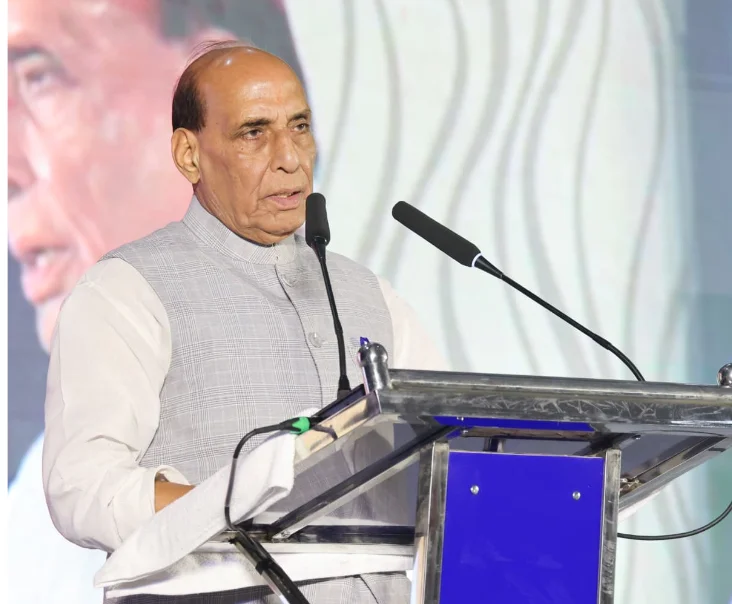
KOCHI, SEPTEMBER 18: Defence Minister Rajnath Singh on Friday said the government is working towards building a resilient, determined, compassionate and self-reliant India as part of the vision of Viksit Bharat@2047.
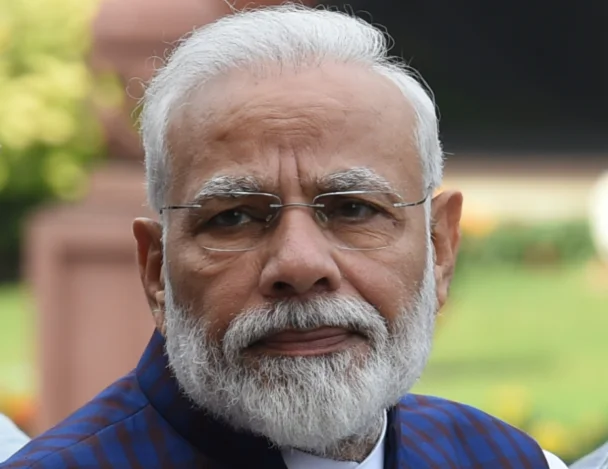
Addressing an event in Kochi, Kerala, Singh said India’s development journey under Prime Minister Narendra Modi was being guided by values such as courage, public service, protection of citizens, compassion, innovation, national strength and inclusive prosperity.
He said India had faced several challenges over the past decade, including the global COVID-19 pandemic and multiple conflicts that affected the world economy. Despite these difficulties, he said the country had continued to move towards greater self-reliance and development.
According to Singh, India’s focus on national security has also been reflected in Operation Sindoor, which he described as demonstrating the country’s resolve to act against threats to its sovereignty and territorial integrity. He also said that Naxalism had been brought to an end.
Highlighting the growth of India’s indigenous defence sector, the Defence Minister said domestic defence production had increased from around ₹40,000 crore in 2014 to nearly ₹1.80 lakh crore. Defence exports, he said, had risen from approximately ₹600 crore to around ₹40,000 crore, with Indian defence equipment now reaching nearly 100 countries.
Singh described India’s youth as one of the country’s biggest strengths, pointing to their contribution to start-ups, unicorns, drones, hydrogen technology, rockets and satellites.
“Our youth are building start-ups, creating unicorns, developing drones, building hydrogen trains, and making rockets and satellites. They are leaving no stone unturned to make India a developed nation,” he said.
The Defence Minister also highlighted the government’s welfare initiatives, saying that more than 250 million people had been lifted out of poverty over the past 10 to 12 years. He cited schemes including PM SHRI, Ayushman Bharat, Lakhpati Didi, Pradhan Mantri Awas Yojana, Jal Jeevan Mission and Ujjwala Yojana as examples of efforts aimed at making development more inclusive.
Singh also referred to UPI, describing it as the world’s largest real-time payment system and noting its adoption in more than 11 countries. He said India’s approach to development and welfare had attracted international attention.
On climate action and global cooperation, Singh said India had achieved several targets related to climate change ahead of schedule. He also highlighted India’s COVID-19 vaccine efforts, stating that vaccines were provided free to people in India and more than 300 million doses were sent to around 100 countries.
He pointed to initiatives such as the International Solar Alliance and the Global Biofuels Alliance, as well as the global observance of International Yoga Day, as examples of India’s growing international engagement.
Singh said India’s development should not be viewed only through the lens of economic growth, but should also involve strengthening national confidence and moving beyond what he described as a colonial mindset.
He emphasised the importance of preserving India’s cultural and civilisational heritage alongside modernisation. Referring to the principle of “Sarva Dharma Samabhava”, Singh said equal respect for all faiths had been an important part of India’s civilisational ethos. He also expressed his view that Western interpretations had sometimes portrayed Indian concepts of Dharma and tradition differently.
The Defence Minister called for greater awareness among young people about India’s history, culture and heritage, saying this could contribute to stronger national consciousness. He urged the youth to play a greater role in the country’s economic, social and technological transformation.
Singh also highlighted the role of the media in a democracy, describing journalism as the fourth pillar of democracy and stressing the importance of an independent and impartial press.
“The role of the media is not merely to report the news. It is also to ask difficult questions, bring the truth before the people, and hold those in power accountable,” he said.