AMSTERDAM, October 30: A new museum in Amsterdam is offering visitors an unusual and somewhat eerie experience, where humans are kept behind metal cages while hundreds of preserved animals appear to roam freely around them.
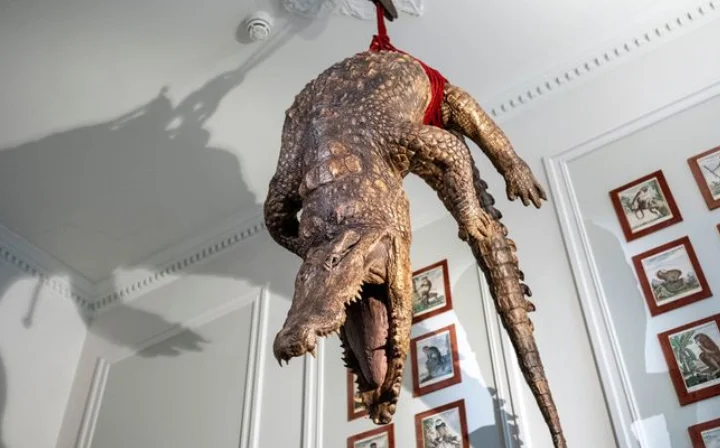
The Art Zoo museum features an extraordinary collection of taxidermied creatures, including a massive 12-foot crocodile suspended overhead with its jaws wide open, alongside piles of animal bones, unusual fish specimens and illuminated tulips displayed inside glass jars.
Although the museum is not designed specifically for Halloween, its dark and dramatic atmosphere makes it an unusual attraction during the spooky season.
Visitors have described the experience as both fascinating and unsettling. Tomas Vasko, a Slovak resident of Amsterdam, admitted that the exhibition felt a little creepy after exploring its displays.
The museum is the creation of Dutch artists Jaap Sinke and Ferry van Tongeren, who drew inspiration from the historical concept of Wunderkammer, or curiosity cabinets. Wealthy Europeans in the 16th and 17th centuries used these collections to display unusual objects, scientific specimens and natural wonders.
The artists aim to combine natural history with artistic storytelling by presenting animals in dramatic and unconventional poses.
"We like storytelling with the animals. We like to add drama," van Tongeren told The Associated Press, explaining how their approach differs from traditional taxidermy, which generally attempts to recreate animals in natural poses.
Unlike conventional natural history museums, where animals are displayed in simulated natural habitats, Art Zoo features striking arrangements. A Japanese giant spider crab, for instance, stretches its six-foot legs above a doorway, while the enormous leg bones of a mastodon reach almost to the ceiling.
A cheetah positioned in an alcove and a cassowary standing nearby add to the unusual atmosphere.
The artists first gained international recognition in 2015 when British artist Damien Hirst purchased their entire exhibition at an art show in London.
One of the museum's most distinctive features is its design. Located inside a 17th-century canal house, the exhibition rooms are surrounded by dark metal cages, placing visitors inside confined spaces while the preserved animals remain seemingly free.
Van Tongeren said the concept deliberately reverses the traditional zoo arrangement, where animals are confined and humans move freely.
The creators also emphasise that none of the animals were captured from the wild. According to Sinke, all specimens came from zoos where the animals died of natural causes. The artists primarily sourced specimens from Europe to ensure their backgrounds and origins could be traced.
The duo also considers naturalist Charles Darwin an important influence on their artistic vision, describing him as the third member of their creative partnership.
One display features a series of sideways-facing busts of Darwin, paying tribute to his contribution to the scientific understanding of evolution. The installation also carries an ironic touch, as the building previously housed the Biblical Museum.
Not all the creatures on display are genuine animals. Beneath the suspended crocodile is a collection of so-called Jenny Hanivers, which are modified ray carcasses that 16th-century sailors transformed into grotesque figures and presented as mythical sea monsters.
With its unusual combination of art, science, history and macabre displays, Amsterdam's Art Zoo offers visitors a completely different perspective on the relationship between humans, animals and the natural world.